Skip to content

Fridge repair in Dammam

We repair fridges and refill gas. Our shop is in Al-Jalawiyah, Dammam.

Lulwa Air Conditioning & Refrigeration repairs fridges in Dammam and refills their gas. Photograph the fault, or film the fridge with sound if it is noisy, and send it on WhatsApp or call 056 802 2197. The shop is in Al-Jalawiyah and is open every day from 8:00 AM to 11:00 PM.

All services

Common fridge problems

A fridge usually tells you what is wrong before it stops completely. Match what you notice to the list, then photograph it for us.

  • Not cooling

    The inside is warm, the freezer is soft, and food spoils faster than it should.

  • Leaking water

    Water collects under the fridge or at the bottom of the fridge compartment, or the floor around it is wet.

  • Will not turn on

    No light, no hum and a dead display, even though the socket has power.

  • Loud

    Grinding, buzzing, rattling or constant clicking, louder than the usual soft hum.

  • Frost building up

    Thick frost on the back wall of the freezer, or ice that keeps coming back after you clear it.

  • Door does not seal

    The door does not shut fully, the rubber seal looks cracked, or the edge of the door sweats.

See where the fridge fault sits

Pick a problem and the part we would look at first lights up on the fridge. It shows the likely part only; a technician confirms it.

Fridge

Pick what is wrong, as many as apply.

What you can safely check yourself

These checks need no tools. Never pull off the back panel, and leave the gas, the compressor and the wiring to a technician.

Not cooling
  1. Check the plug is in and the socket has power.
  2. Check the temperature dial or display has not been knocked to a warm setting.
  3. Close the door fully and make sure nothing is caught in the seal.
  4. Leave a gap behind and beside the fridge for air.
  5. Keep the door shut and move delicate food somewhere cold.
Leaking water
  1. Unplug the fridge before you wipe the water around it.
  2. Check the door closes fully.
  3. Wipe the small drain hole on the back wall inside, if you can see one.
  4. Photograph where the water comes from.
Will not turn on
  1. Check the plug and try another socket.
  2. Check the breaker for that socket is on.
  3. See whether any light or display comes on.
  4. Photograph the display if it shows a code.
Loud
  1. Check the fridge stands level and does not touch the wall.
  2. Move anything loose that sits on top of it or behind it.
  3. Work out whether the noise is inside or at the back.
  4. Film a short video with sound.
Door does not seal
  1. Wipe the rubber seal with a damp cloth and dry it.
  2. Do not force the door shut.
  3. Do not scrape frost with a knife.
  4. Photograph the gap or the damaged part of the seal.

When to stop and message us

Some fridge faults are not safe to test. If you notice any of these, unplug the fridge if you can reach the plug safely, and send us a message.

  • A burning smell, smoke or sparks.
  • The breaker trips when the fridge starts.
  • Oily marks at the back or underneath, or a sharp chemical smell.
  • Water near the plug, the wires or the control board.
  • A clicking that repeats as the fridge starts and stops again and again.
  • Any fault that would mean removing a panel or touching wires.

Common faults and fixes

Why is my fridge not cooling?

Keep the door shut so the cold stays in. The cause can be blocked airflow, low gas or the compressor. Gas and the compressor need a technician.

What you can check yourself

  • Check the fridge is plugged in and the room has power.
  • Check the door closes fully and nothing is stuck in the seal.
  • Leave space behind and beside the fridge for air.
  • Move delicate food somewhere cold for now.

This needs a technician

  • The compressor not running, or starting and cutting out.
  • Low gas or a gas leak.
  • The control board.

Why is my fridge leaking water?

Water under a fridge is often a blocked defrost drain or a worn door seal. Unplug the fridge before touching the water around it and send us a photo.

What you can check yourself

  • Unplug the fridge before wiping up water around it.
  • Check the door closes fully.
  • If there is a small drain hole inside at the back, flush it gently with a little warm water. Never push a wire or anything sharp into it.
  • Photograph where the leak is.

This needs a technician

  • A drain you cannot reach.
  • Frost that keeps building at the back.
  • Water near wires or the board.

Why is my fridge so loud?

A soft hum is normal. A loud, grinding or constantly clicking noise can come from the fan or the compressor. Film a video with sound and send it to us.

What you can check yourself

  • Check the fridge stands level and does not touch the wall.
  • Check nothing loose sits on top or behind.
  • Listen, without reaching behind it, whether the noise is inside or at the back.
  • Film a short video with sound.

This needs a technician

  • Constant grinding or clicking.
  • A noise that grows over time.
  • The fan or the compressor.

Refrigerator Types and Repair in Dammam

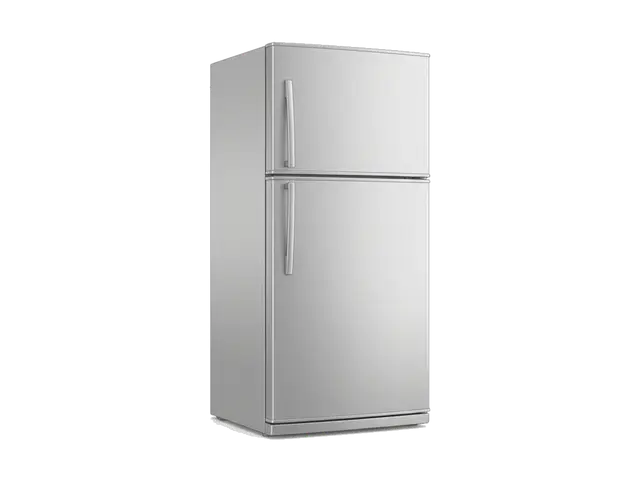
A refrigerator serves as a cornerstone of household food preservation in the Eastern Province climate, which is why our workshop provides dedicated fridge repair in Dammam across various domestic configurations. We repair top-freezer configurations that remain popular for their straightforward cooling pathways, alongside bottom-freezer designs that keep everyday fresh foods easily accessible at eye level.

Multi-door models such as side-by-side and French door refrigerators require careful technical attention because they incorporate electronic damper motors and dual airflow channels that regulate cooling and humidity separately. In addition, modern inverter refrigerators equipped with digital variable speed compressors differ from conventional on-off motors by adjusting motor speed continuously, demanding thorough electrical diagnostics during domestic refrigeration maintenance.

How Refrigeration and Defrost Cycles Work

A refrigerator relies on a continuous closed mechanical cycle to transfer heat energy from inside the storage compartments to the surrounding room environment. The compressor pressurizes the refrigerant gas and circulates it through the condenser tubing where heat radiates away, before the liquid passes through a metering tube into the freezer evaporator to absorb heat and vaporize.

The evaporator fan then circulates chilled air from the freezer coil into the lower refrigerator compartment through dedicated ducting. To prevent moisture from accumulating as heavy ice on the coils, an automatic defrost cycle activates periodically using an electric heater, bimetal thermostat, and defrost timer to melt frost, which helps diagnose poor cooling symptoms and assess whether a refrigerant recharge is really required.

Coastal Humidity, Summer Heat and Fridges

The hot coastal climate in Dammam exposes domestic refrigerators to relentless operational demands that degrade cooling performance and mechanical components over time. Elevated kitchen ambient temperatures during summer force the compressor to run for prolonged cycles to dissipate cabinet heat, raising condensing temperatures and increasing mechanical wear on internal motor assemblies.

High ambient humidity causes condensation to collect along door perimeters, deteriorating flexible rubber magnetic gaskets and allowing warm moist air to seep into the cabinet and form heavy frost deposits. Airborne dust and atmospheric salts also settle across bottom-mounted condenser coils and drain pans, creating a dense blanket that suffocates airflow around the compressor housing.

Seasonal Preventive Care for Fridges

Regular seasonal maintenance protects the refrigeration compressor from strain and safeguards stored household groceries against unexpected spoilage. At the onset of spring, unplug the appliance and clean the lower condenser coils with a soft brush or vacuum cleaner to remove accumulated dust and facilitate proper heat transfer.

During summer months, test the door seal tightness with a slip of paper to confirm airtight closure, while clearing the internal defrost drain hole prevents water from pooling beneath lower produce crisper drawers. Throughout autumn and winter, check temperature settings, clean interior shelving, and inspect power cords to prevent electrical issues associated with seasonal humidity.

Factors Behind Refrigerator Repair Costs

The cost of repairing a residential refrigerator depends directly on the specific damaged part and the technical complexity of restoring proper operation. Replacing a standard evaporator fan motor or defrost bimetal sensor involves modest technical intervention compared to brazing sealed circuit copper and renewing the filter dryer during a refrigerant leak repair.

Compressor repair or replacement requires precise evaluation of motor horsepower, electrical phase requirements, and whether the system runs on standard or modern hydrocarbon refrigerants requiring specialized safety brazing equipment. An experienced refrigerator technician in Dammam conducts electrical insulation testing and checks both suction and discharge operating pressures to confirm long-term cooling stability.

Fridge Repair Evaluation and WhatsApp

Repairing a refrigerator is an economical and prudent choice when the internal liner and outer steel cabinet remain solid and undamaged by rust, with malfunctions confined to airflow fans, thermostats, or modular electronic control boards. However, when an elderly appliance suffers internal refrigerant leaks embedded within non-accessible foam insulation alongside a failing motor, investing in a new energy-saving model provides greater value.

To coordinate repair service with our workshop in Al-Jalawiyah district in Dammam, please take a readable photograph of the model label affixed to the inside cabinet wall and record a short video clip showing the motor sound or cooling issue. Send these details alongside your residential neighborhood on WhatsApp so our workshop can review your situation and advise on the next steps.

Door, condensation and fan faults

The door gasket is the first thing to check when a fridge sweats or frost forms around the door. Place a thin sheet of paper between the gasket and the cabinet and close the door; if it slides out easily, the seal is weak and humid air gets in. In Dammam humidity, that air turns into water and frost on the evaporator within days. Clean the gasket with warm water and make sure the fridge stands level and the door closes by itself, because many cooling complaints start with these small details long before any internal fault.

The internal fan moves cold air from the freezer into the fresh-food section, so when it stops, the freezer stays cold and the fridge warms up. Press the door switch and listen; if the airflow sound is missing, the fan may have failed or the vents may be blocked with frost. Dust also collects on the condenser at the back or bottom during the hot months and raises the load on the compressor. These observations help a technician doing fridge servicing in Dammam choose the right direction at the first inspection without needless dismantling.
Common questions

Do you refill fridge gas?

Yes, gas refilling is one of our fridge services.

My fridge is not cooling. What should I do?

Keep the door shut so the cold stays in, and send us a photo or video. We will reply.

What determines the cost of fridge repair and gas refill in Dammam?

Costs depend on the refrigerant specification, unit capacity, and the labor required to locate and braze tubing leaks and replace the inline filter dryer before recharging. The workshop inspects the appliance history to clarify necessary repair procedures beforehand.

Why does the refrigerator stop cooling below while the freezer still freezes?

This issue typically arises when thick frost blocks the evaporator coil due to a faulty defrost heater or bimetal thermostat, or when the circulating evaporator fan fails and prevents cold air from reaching the lower compartment.

How is refrigerator compressor replacement handled in Dammam?

Replacing a compressor involves recovering existing refrigerant, cutting and brazing copper pipe connections, evacuating air and moisture with a vacuum pump, and weighing in fresh gas. These technical procedures are performed at our Al-Jalawiyah workshop to maintain refrigeration cycle efficiency.

How can I contact the refrigerator repair workshop in Dammam?

Our workshop in Al-Jalawiyah district in Dammam welcomes customer calls and WhatsApp inquiries at 056 802 2197 every day between 8:00 AM and 11:00 PM, allowing you to share equipment photos and symptoms for diagnostic guidance.

Why do water droplets form on the outside of the fridge in summer?

It happens when warm humid air meets a cold surface, which is common in Dammam humidity, especially with a weak gasket or a door opened often. Check that the door seals and that there is ventilation behind the fridge. If the sweating stays heavy along with weak cooling, ask for the gasket and fan to be inspected.

Fridge still not right?

Send a photo or a short video on WhatsApp, or call 056 802 2197. We look at what you send and take it from there.