Skip to content

AC repair in Dammam

We repair split and window ACs. Our shop is in Al-Jalawiyah, Dammam.

Lulwa Air Conditioning & Refrigeration repairs split and window air conditioners in Dammam. Photograph the fault, or film the unit while it runs, and send it on WhatsApp or call 056 802 2197. The shop is in Al-Jalawiyah and is open every day from 8:00 AM to 11:00 PM.

All services

Common AC problems

Most AC faults show one sign before any other. Match what you notice to the list, then photograph it for us.

  • Runs but does not cool

    Air comes out but it is warm or only slightly cool, and the room takes much longer than usual to cool down.

  • Leaking water

    Water drips from the indoor unit, runs down the wall or pools under the unit.

  • Freezing up

    Ice or frost on the pipes or the front of the unit, with weak airflow.

  • Will not turn on

    No light on the unit and no response to the remote, or it starts for a moment and switches itself off.

  • Loud

    Rattling, buzzing, clicking or grinding from the indoor or the outdoor unit, a noise it did not make before.

  • Weak airflow and a musty smell

    The air does not reach as far as it used to and the room smells damp. A clogged filter is a common cause.

See where the AC fault sits

Pick a problem and the part we would look at first lights up on the AC. It shows the likely part only; a technician confirms it.

What you can safely check yourself

These checks only need the remote, the filter and your eyes. Never open the unit, and leave the gas and the wiring to a technician.

Runs but does not cool
  1. Set the remote to cool, with a temperature below the room’s.
  2. Close the doors and windows in the room.
  3. Switch the AC off and take out the filter.
  4. Rinse the filter, let it dry fully, then put it back.
  5. Leave the gas to a technician.
Leaking water
  1. Switch the AC off so the dripping stops.
  2. Look at the drain hose outside the wall for a kink or a bend that holds water.
  3. Straighten the hose if it is kinked, and do nothing more to it.
  4. Clean the filter and let it dry.
  5. Photograph where the water comes from.
Freezing up
  1. Switch the AC off and let the ice melt.
  2. Put a towel under the unit for the meltwater.
  3. Clean the filter and let it dry.
  4. Run the AC on fan only for a while to dry the unit.
  5. If the ice comes back, stop and send us a photo.
Will not turn on
  1. Change the remote batteries.
  2. Check another device works in the same room.
  3. Check the AC’s breaker is on, and leave it off if it trips again.
  4. Photograph any light or code on the indoor unit.
Loud
  1. Switch the AC off if the noise is grinding or clicking.
  2. Listen from inside, without climbing or going near the outdoor unit, to tell whether it comes from the indoor or the outdoor unit.
  3. Switch the AC off, then clean the filter.
  4. If you can see the outdoor unit safely from the ground or a window, check nothing rests against it, such as a branch or a box. Do not touch it.
  5. Film a short video with sound.

When to stop and message us

Some AC faults are not safe to test. If you notice any of these, switch the AC off and send us a message.

  • A burning smell, smoke, sparks or a popping sound.
  • The breaker trips when the AC starts, or trips again after you switch it back on.
  • Oily marks on the pipes or the outdoor unit, or a hissing sound, which can point to a gas leak.
  • Ice that comes back after you have cleaned the filter.
  • Water near sockets, wires or the control board.
  • Any fault that would mean opening the unit or touching wires.

Our work

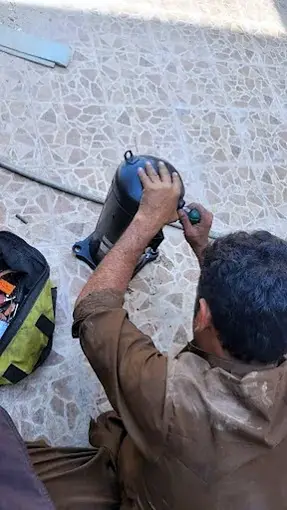
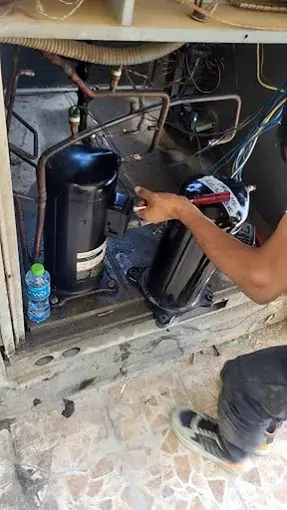
AC: fitting a compressor
AC: changing the compressor
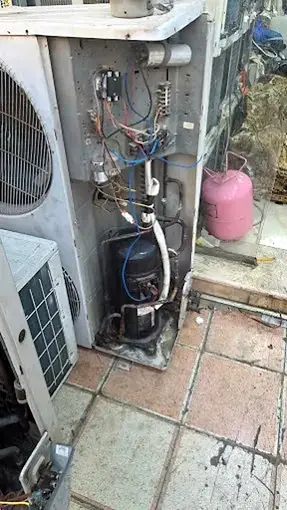
Outdoor unit: checking the wiring
AC: connecting the compressor

Common faults and fixes

Why does my AC run but not cool?

Often a dirty filter or low gas. You can clean the filter yourself once the AC is off. The gas and anything inside the unit is for a technician.

What you can check yourself

  • Check the remote is on cool and the set temperature is below the room temperature.
  • Switch the AC off, take out the filter, clean it and let it dry before putting it back.
  • Close the doors and windows in the room.
  • Film a short video of the indoor unit running. Do not climb to reach the outdoor unit.

This needs a technician

  • Low gas or a gas leak.
  • The compressor or the outdoor fan.
  • Anything that means opening the unit or touching wires.

Why is my AC leaking water?

An AC drains water through a pipe. If it drips inside the room, the drain is usually blocked or the filter is dirty. Switch it off and send us a photo.

What you can check yourself

  • Switch the AC off so the water stops.
  • Look at the drain hose outside the wall: is it kinked or blocked?
  • Clean the filter and let it dry.
  • Photograph where the water drips from the indoor unit.

This needs a technician

  • A blockage inside the drain that you cannot reach.
  • The slope or fitting of the indoor unit.
  • Pipes icing over because of the gas.

Why is my AC icing up?

Ice on the unit is often a dirty filter blocking the air, or low gas. Switch the AC off and let it thaw, then clean the filter. If the ice comes back, call a technician.

What you can check yourself

  • Switch the AC off and let the ice melt.
  • Clean the filter and let it dry.
  • Run it on fan only until it is dry.
  • If the ice returns, photograph it and send it to us.

This needs a technician

  • Low gas or a gas leak.
  • The indoor fan not turning.
  • Ice that returns after the filter is clean.

Why is my AC so loud?

A loud AC can mean a dirty filter, something loose, or the fan. If you hear grinding or clicking, switch it off and send us a video with sound.

What you can check yourself

  • Listen from inside, without climbing or going near the outdoor unit, to tell whether the noise comes from the indoor or the outdoor unit.
  • Switch the AC off, then clean the filter.
  • If you can see the outdoor unit safely from the ground or a window, check nothing is resting against it. Do not touch it.
  • Film a short video with sound.

This needs a technician

  • Grinding or clicking from inside.
  • The fan or the compressor.
  • The mounting of the outdoor unit.

Why will my AC not turn on at all?

Check the remote batteries and that the room has power. If the unit shows no light at all, the fault is usually the control board and needs a technician. Do not open the unit.

What you can check yourself

  • Change the remote batteries.
  • Check the room has power and another device works.
  • See whether a light or a code shows on the indoor unit.
  • Photograph the light or code if there is one.

This needs a technician

  • No light and no response from the unit.
  • Any burning smell or popping sound: switch it off at once.
  • Opening the board or checking the wiring.

AC Types and Repair in Dammam

The coastal climate of the Eastern Province demands continuous care for cooling systems, which is why our workshop provides dedicated AC repair in Dammam for residential properties. We repair split systems due to their widespread use in modern homes and strong airflow distribution, while our technician handles window air conditioner repairs for compact units commonly installed in individual rooms and apartments.

Modern inverter air conditioners differ from conventional units by utilizing variable speed compressors that conserve electrical energy and operate more quietly, though their complex electronic inverter boards require specialized diagnostic tools. For central air conditioning and packaged vertical units, send us the equipment photo and your district on WhatsApp first, and our workshop will reply regarding whether we can take the repair.

How the AC Refrigeration Cycle Works

An air conditioner operates as a sealed heat transfer system that extracts warmth from indoor spaces and releases it into the outdoor atmosphere using refrigerant. The mechanical cycle begins when the compressor pressurizes the refrigerant vapor, raising its temperature and pumping it into the outdoor condenser coil where a fan cools it into high pressure liquid.

The liquid refrigerant then passes through an expansion valve that abruptly drops its pressure and temperature before entering the indoor evaporator coil. The indoor blower draws warm room air across these cold copper tubes to deliver chilled air into your living space, while the warming refrigerant evaporates and returns to the compressor to repeat the process. This closed loop relies on tight tubing, and finding leaks is essential prior to performing any refrigerant recharge.

Eastern Province Climate and AC Parts

The local climate in Dammam exposes air conditioning units to rigorous operating conditions due to intense summer heat combined with sustained humidity. Marine air laden with sea salts accelerates the oxidation of aluminum fins and copper tubing in outdoor condenser units, reducing heat dissipation efficiency and wearing out metal protective casings.

Airborne dust and seasonal sandstorms settle into air filters and outer condensing coils, restricting airflow and causing the compressor to overheat and trip its internal thermal protection switch. Electrical run capacitors and electronic control boards also experience premature degradation from continuous thermal stress, explaining sudden system shutdowns during the peak hours of hot summer afternoons.

Seasonal AC Maintenance Routine

Scheduling periodic preventive maintenance preserves air conditioner reliability and prevents abrupt failures during the hottest months in the Eastern Province. During spring before temperatures surge, washing the indoor dust filters with lukewarm water and inspecting the condensate drainage line to clear accumulated grime ensures smooth moisture runoff.

During peak summer, verify that outdoor condenser units maintain unimpeded ventilation clearance and keep thermostat settings moderate to prevent compressor overload. As autumn and winter arrive, clean and dry filters thoroughly while placing protective weather shields over exposed outdoor units to protect them from blowing dust until the next cooling season.

Factors Behind AC Repair Costs and Parts

The cost of repairing an air conditioner varies depending on the specific mechanical or electrical failure diagnosed in the system. Replacing a standard motor capacitor or contactor relay involves different technical requirements compared to addressing an internal compressor failure or brazing damaged copper refrigerant lines in tight spaces.

The brand of the air conditioner and the availability of compatible replacement components also influence the repair scope, alongside the volume of refrigerant required if a previous leak occurred. A qualified cooling technician inspects the system to pinpoint root causes and verifies balanced cycle pressures before finishing the job.

Repair or Replacement and WhatsApp Contact

Repairing an air conditioner is a practical and economical decision when the structural chassis remains solid and the unit has not exceeded its useful operating life, particularly when faults are isolated to fan motors, thermal sensors, or control boards. Conversely, if an aging unit suffers recurring compressor burnout alongside severe coil corrosion, upgrading to a modern energy efficient model may prove more advantageous over time.

To initiate service coordination with our workshop in Al-Jalawiyah district in Dammam, take a clear photograph of the technical specification sticker located on your unit and record a short video clip showing the symptom or water leak. Send these details along with your neighborhood name on WhatsApp so our workshop can review your situation and recommend the right next step.

Weak cooling, ice buildup and AC dripping

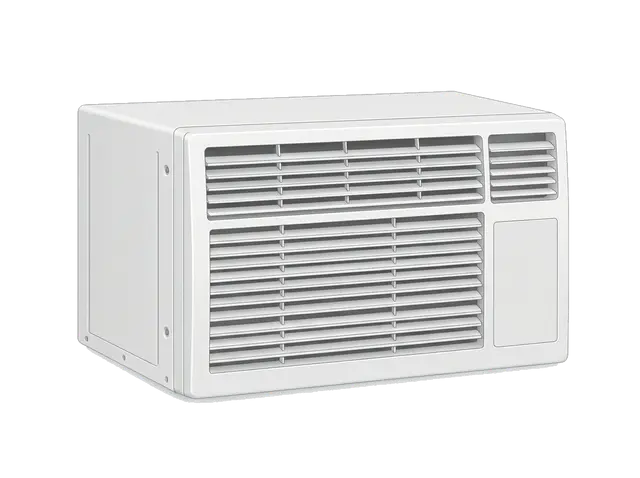
If cooling gets weak, start with what you can check safely: clean the filter, make sure the air outlet is not blocked and check the remote settings. Ice on the evaporator or the pipe usually points to low airflow or low gas, and running the unit longer does not solve it. Switch it off and let the ice melt, then review the filter. If the ice returns, the unit needs an inspection to find the cause before the compressor suffers.

Water dripping from the indoor unit is usually linked to a drain hose clogged with dust and algae, an incorrect tilt at installation, or melting ice. In Dammam humidity, a lot of condensate forms and needs a clear path. Do not open the electrical parts yourself, and note when the dripping starts. These details help with AC servicing in Dammam, because they separate a simple drainage problem from a leak in the cooling circuit that needs specialist handling.

Common questions

My AC runs but does not cool. What should I do?

Check that the filter is clean and the remote is set to cooling. If nothing changes, send us a short video on WhatsApp and we will reply.

Do you repair window ACs?

Yes, we repair window and split ACs.

What determines the repair cost for a split air conditioner in Dammam?

Repair costs depend on the nature of the fault, whether it involves an electronic control board failure, a damaged fan motor, or a refrigerant pipe leak, alongside unit capacity and part availability. The workshop evaluates the problem description and model sticker before detailing the repair requirements.

What factors influence the cost of recharging split AC refrigerant in Dammam?

Refrigerant recharge costs are influenced by the specific gas type required by the compressor and the extent of pressure loss, along with the labor needed to locate and seal tubing leaks prior to refilling. The workshop checks the sealed circuit to ensure stable operating pressure.

Does repairing a window or split air conditioner take place in the workshop?

Yes. Our workshop in Al-Jalawiyah handles comprehensive diagnostic inspections, refrigerant leak repairs, copper pipe brazing, and high-pressure coil washdowns using workshop equipment. Send a photo of the unit and a description of the issue on WhatsApp before bringing it in.

How can I contact the air conditioner repair workshop in Dammam?

Our workshop in Al-Jalawiyah district in Dammam welcomes inquiries by phone call or WhatsApp messages at 056 802 2197 every day from 8:00 AM to 11:00 PM, allowing you to share equipment photos and fault descriptions for direct guidance.

Why does ice form on the AC pipe even in hot weather?

The usual causes are a clogged filter, a weak indoor fan or low gas, which pull the evaporator below freezing so moisture turns to ice on it. Switch the unit off, let it thaw and clean the filter. If the ice returns, ask for an inspection instead of running it again.

AC still not right?

Send a photo or a short video on WhatsApp, or call 056 802 2197. We look at what you send and take it from there.